Friday, October 11, 2013
Indecission 2013
After Nearly 5 years of procrastination the Malagasy may finally have themselves an election. On October 25th Gasy will go to the polls, or more accurately the polls will come to them, and have a chance to vote for one of 34 different candidates running for the big seat in Tana. Unlike the Super bowl binary that we have in the states, Gasy have opted for a true democratic approach; where 33 of the 34 candidates are from the high plateau, all candidates must pay 50,000,000Ar ($25,000) to run (the average wage of a Gasy farmer is 2,500Ar, therefore it would take him or her roughly 56 years of labor without food, clothing or drink to raise such a sum; apparently in all fairness this was deemed possible by the electoral court), and piles of other money, which has been spent on campaign wagons and posters that clearly display which box to select on the ballot; take that Diebold. Of the candidates there is one female, a representative of Madagascar’s Green Party, and one representative from the Islands coastal population, otherwise there’s little difference between the remaining candidates.
The election’s still a big deal though, after two years of rescheduling by Andry Rajoelina, it appears that it is actually going forth and we expect a result. Gasy opinion on the coast is indifferent. The consensus is that things were better before Rajoelina and they’ll be better without him otherwise it’s more of the same. Considering this is a primary election, in which candidates with 10% or more of the vote will advance to the main event in December, indifference is a bit hard to judge. Does this mean the Gasy don’t care about such a crapshoot as 34 candidates present or that the possible 9 that advance will go just unnoticed? The big issues here are: the cost and availability of food, roads or lack thereof, and access to education; but it’s a tough to see how any candidate is going to resolve those overnight. The typical nature of politics here is that every 7 years there’s a coup (2009, 2002, 1995) if this continues how can any candidate hope to gain support in just 2 years; judging by enthusiasm it’s definitely leaning toward another one. But also this lack of enthusiasm means that there’s little likelihood of violent revolt to the results of this election; Gasy want stability in any form and that’s good for the Peace Corps too because another coup would likely close3 the program for some time. The people running may not realize that, but those whom I work with certainly don’t want me to leave.
Salama
Nick

Monday, June 10, 2013
Indiana Jones and The Lemurs of Tsingy
So if you were all wondering where I’ve been, I’ve been even further back in time, and even further away from civilization than I thought I already lived. On June 1st after attending a Mid-Service concert chock full of beekeeping information and medical exams, 9 fellow PCVs and myself embarked on a week long journey that would take us far away from the tropical forests that we’ve become so used to. For once instead of heading east, we head west into the mysterious desert lands that this country has to offer. Starting in Antsirabe, Mada’s coldest city and also the home of THB, Mada’s best attempt at a tropical pilsner derivative, we loaded up and set out for Miandrivazo, which is currently fighting for the title of Mada’s hottest city. There we took our Mercedes 412 Sprinter, which is usually accustomed to delivering sausages about Leipzig, into the desert savanna on route to the banks of the Tsiribihina River. We loaded ourselves and gear into three Pirogues and crossed to river to make camp for the night.


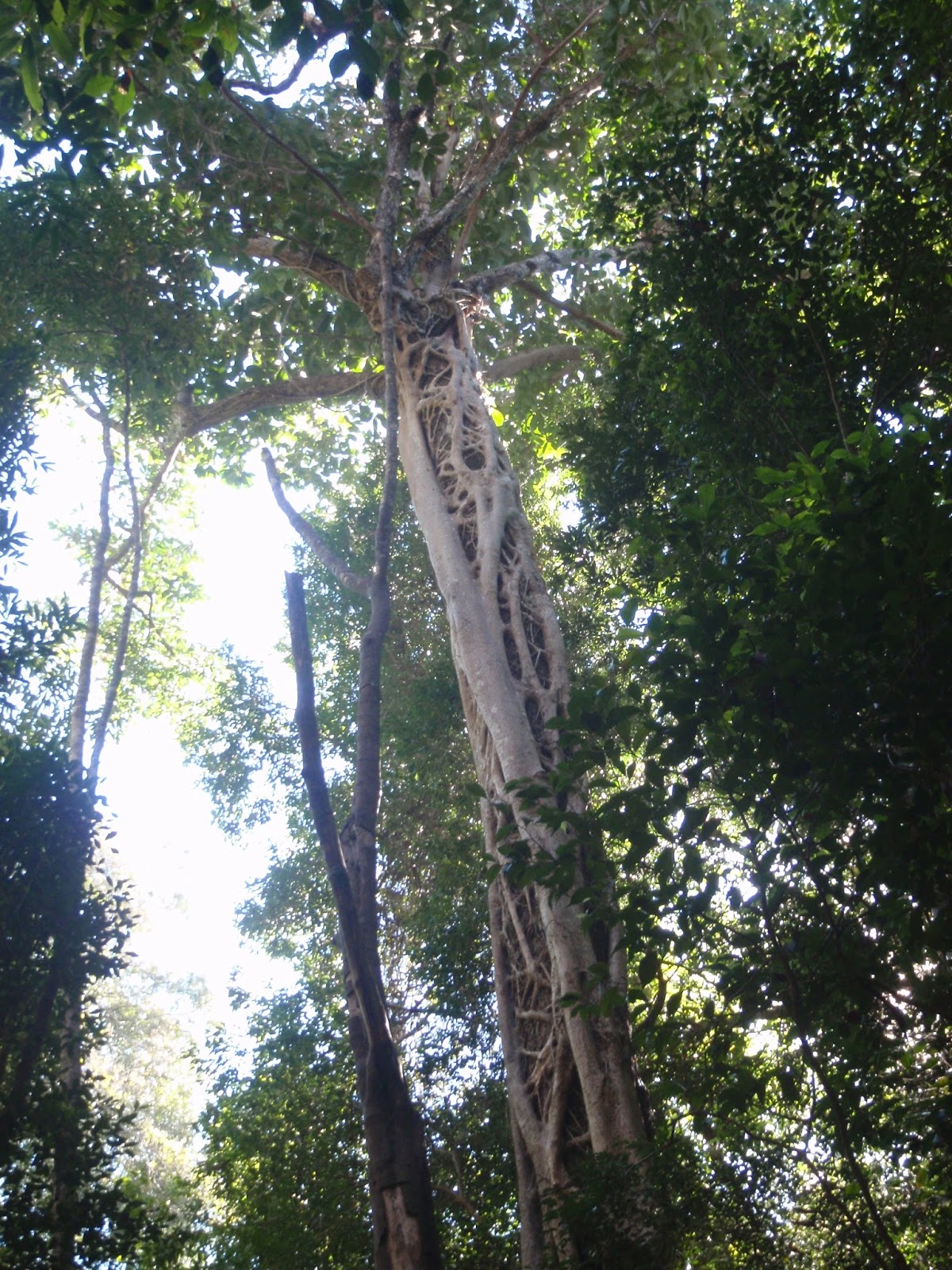


That's our guide Bee, and a bean loaded slingshot aimed at me
Then we tried to leisurely fish among a gaggle of gasy children
Rice again, but I’m on vacation
Tents Check!
Beers Check!
Crocs Abound
Lurkin' on the Shore
Shade's a rare commodity
Lunch
“Strung together like a floatin’ trailer park”
Croc Bait
FYI Limestone pools are really slick
We traded in our Pirogues for a 4X4 mounted on two bit ferry
Only when we stopped to take a break did our driver realise we had a flat
With all these ferries, it's beginning to seem more and more like Oregon Trail
A traditional Lemur Tree House
Spelunking anyone?
Ah the Avenue at Sunset
Salama
Nick
Sunday, June 9, 2013
Stomp Out Malaria!
April is/ was World Malaria Month and for PCVs even more of a push to help Stomp Out Malaria in Africa. Madagascar is still considered one of the red zones in Africa for malaria but interestingly enough its presence is as diverse as its geography. The highlands are typically too cold for the anopheles mosquito (the most deadly and prevalent malaria carrying mosquito) but the eastern coast with its high rainfall and equally high temperatures is particularly at risk for malaria epidemics. Thus preventions is key and that starts with bed nets (the anopheles bites between 6:00 PM and 6:00 AM); a massive distribution was held this previous October, and now our work focuses on insuring that those nets are cared for and anyone who still doesn’t have one has access to one. The real leg-work of the project were the murals that we painted throughout the Sud-Est, and each mural was then followed up with a community Q&A about malaria prevention, diagnosis, and treatment. Then in a quiet sea side town of Farafangana we rented a PA system during market day and “preached” to the people about malaria prevent ion and even got them to try: properly washing their nets, repair holes and tears, and how to hang their net from a single point. This was followed up by a trip to Farafangana’s Lycee (High School) where we gave a bilingual malaria presentation. The biggest component of Stomp Out Malaria is education and over the past 5 years Madagascar alone has seen a dramatic decrease in Malaria related deaths. More Malagasy have and use bed nets, more Malagasy know the symptoms of malaria and that RDT (Rapid Diagnostic Tests) are readily available CSBs (Community Health Centers) and are free, and finally that Malaria is a disease that can be prevented and doesn’t have to be fatal.


Salama
Ampasimanjeva
Ambalona
Farafangana
Salama
Nick
Friday, March 29, 2013
PCV Cribs
I’ve become rather accustomed to the Malagasy life style and at times it’s so easy to forget just how different it all is from life back in the states; one just takes it as it comes, and that’s that. I’m proud of my home and in many ways it’s one of the better crafted ones in my village, which at times is quite a badge of honor despite the fact all the houses are essentially grass huts. But just this last Monday I took part in the construction of a new roof for my neighbor’s house, and it was at this moment that I discovered something really unique about ourselves as a people. Getting in the trenches I quickly found the same work environment that I was so accustomed to in the states, here we were, the local carpenters, all working together and making a serious dent in the project; material was being burnt up, coffee was slammed, jokes were cracked, and then the roof was complete. Although a Ravinala house differs greatly from houses even in the Highlands of Madagascar let alone the United States, we weren’t just building a house were building a home, and there’s a universal bond in that, that I believe every carpenter can understand.


With that said, I think it’s also long overdue for me to present you, the reader, with a relatively tour of my own living establishment from the inside out.
 Here’s my professional kitchen complete with a hand built eucalyptus counter top and 3 burner gas range. This is where the majority of non Malagasy food is prepared in Ambalona: everything from oatmeal to eggs & homes, chili, pasta, and my specialty fish ‘n chips.
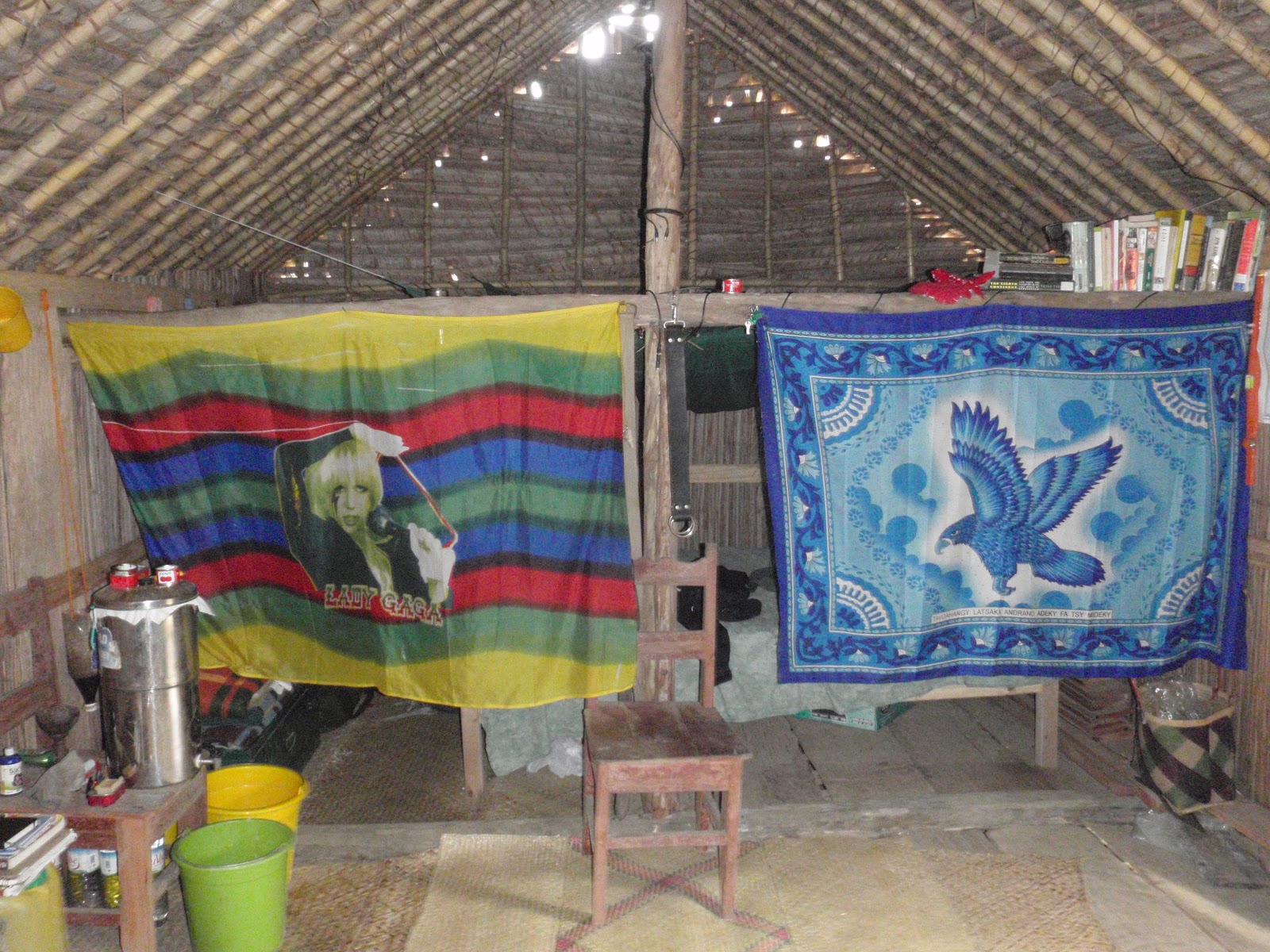 The kitchen opens into a large living & dining area complete with state of the art LED lighting, which then extends to a writers nook complete with an integrated bookshelf. The structure of this space is softened by one of a kind drapes that also divide it from the neighboring sleeping chamber, which features a full bed, stamped steel armoire, and studio.
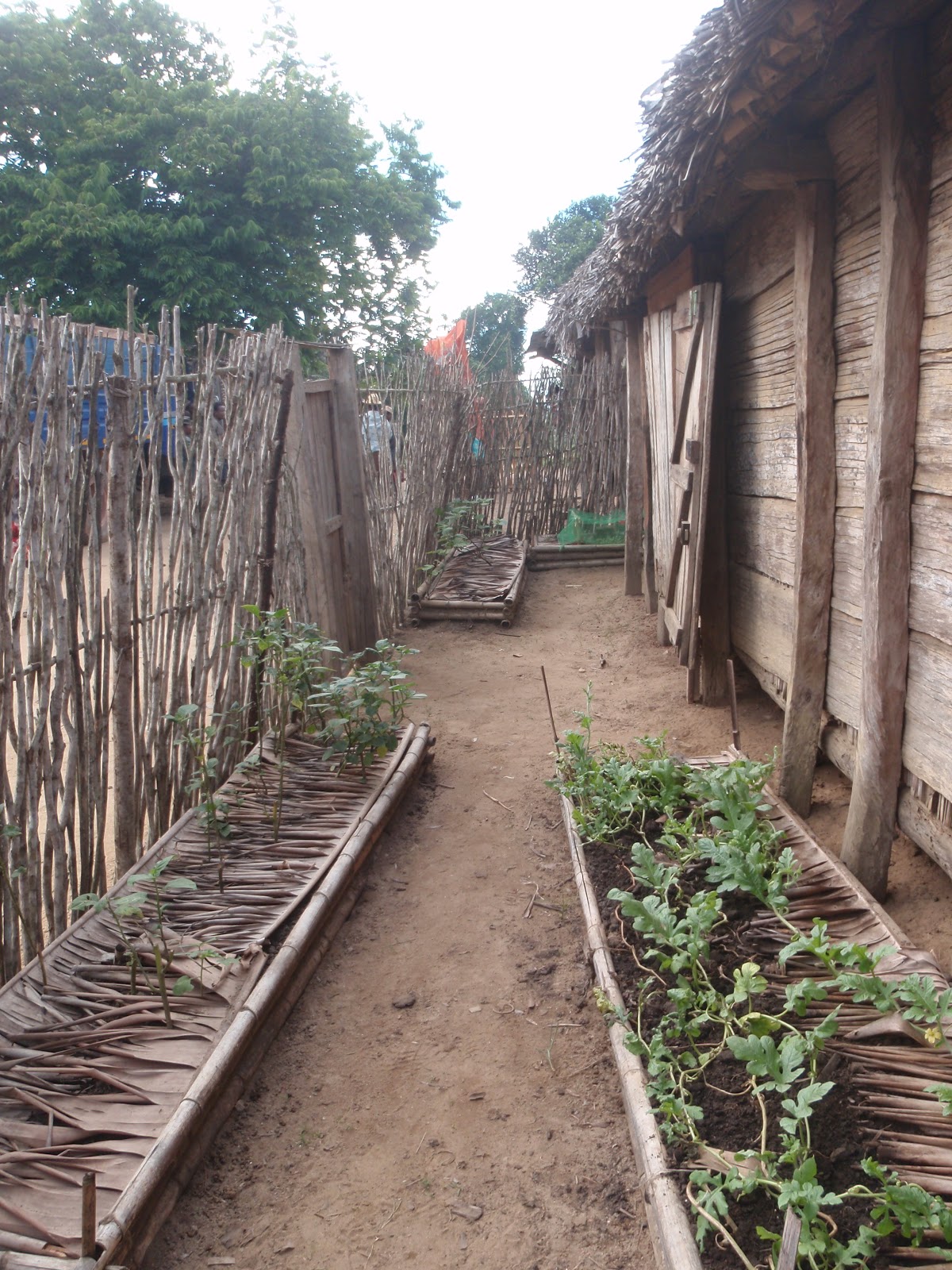


Exiting through the rear gate past an array of Spanish Flag and Indian Spinach one will be quite pleased to find the restroom situated quaintly under coffee trees and also unreasonably close to neighboring homes.
Berlin, St. Albans, & Ambalona?
"It's Good To Be King"
With that said, I think it’s also long overdue for me to present you, the reader, with a relatively tour of my own living establishment from the inside out.
Double French doors open to an inviting garden that encompasses the homestead.
The charming path leads to a petit conservatory and pepinaire
In the rear yard one will find the steel framed shower complete with a state of the art rain collection system, and conveniently located composting center.
Exiting through the rear gate past an array of Spanish Flag and Indian Spinach one will be quite pleased to find the restroom situated quaintly under coffee trees and also unreasonably close to neighboring homes.
Salama
Nick
Tragedy & Treasure
So the end of January brought a little bit of excitement to my village and I’m sure a whole lot more of excitement to the driver of a Renault Magnum heading south bound on Madagascar’s RN12. On approximately the morning of January 24th 2013 said camion caught fire due to a mechanical malfunction. The fire quickly spread to the fuel system and then proceeded to consume the camion and its contents. The driver escaped without injury however the wreckage remained at the roadside for the next three weeks. During this time various members of my community and other neighboring ones, scuttled the remaining cargo, which apart from: mattresses, batteries, and sardines was predominantly nails, hinges, and roofing metal; all things that respond well to ServPro practices. So all of a sudden I found the majority of my village the proud new owners several Kilos of nails, hinges, and roofing metal but I’ve still yet to any new doors being built.


In a positive light, one can be certain in the US that those goods would have been scrapped, reclaimed, and perhaps compose the steel of an entirely new and different product. But in this case the products were reclaimed (stolen, scuttled, however you like), repaired and immediately put to use. While the manufacturer recoups his/her losses, the people of Ambalona have enough hardware to easily support their constructive ambitions for the next decade or two. What’s your take?
Salama
Nick
I can't beleive Renault would put their name on that
The Great Dine Masacre of 2013
In a positive light, one can be certain in the US that those goods would have been scrapped, reclaimed, and perhaps compose the steel of an entirely new and different product. But in this case the products were reclaimed (stolen, scuttled, however you like), repaired and immediately put to use. While the manufacturer recoups his/her losses, the people of Ambalona have enough hardware to easily support their constructive ambitions for the next decade or two. What’s your take?
Salama
Nick
Tuesday, March 5, 2013
Lucky Cricket

The Soon To Be Legendary Lucky Cricket
So on that first Monday mornin’ Leo and I hit the lumber yard, bought the frame material for our machine, and hired a pos-pos (rickshaw) to haul it back to our build site in Manakarabe. We then spend the rest of the day cutting the boards and posts by hand, but not until we had settled on our design could we assemble the frame. After biking ‘round the market it was time to rethink our initial idea of using PVC for rollers coupled with bike bearings, they were simply too expensive. We slept on the idea and the next day decided that it would be possible to make the same rollers from wood. We spent the better part of the morning tracking down dowels only to discover that store that sold them was closed for lunch and would reopen after 2:00; most stores close @ noon, and it’s difficult when you’re not really sure what you’ll need and when, to complete a project. Now we had our rollers which would gently pinch the husk from the rice leaving that germ that the Gasy know and loves so well. But what we didn’t have was a sound way gearing the rollers and against each other and ultimately attaching to a bicycle, you can’t buy single gears of the same size. So we realized we could make our own gears by fixing nails bent into a U along the rollers. We got inventive and the by the next morning we had our rollers geared and moving in opposite directions. Our design features two stages of rollers so that any husks that sneak through the first set are removed by the second but this means that the two stages must be attached by a belt or chain so that they work in unison. We didn’t have sprockets small enough for the job, so building upon the success of U nail gears we thought that we could make nailed teeth that would function with a bike chain. After carefully cutting the nails that would become the teeth, we marked the holes, drilled them, and secured the teeth with a small bit our epoxy. Now we needed to make our machine appealing to the mechanical bits of a bicycle. We selected one roller to be the drive and carved its end to mate with the crank and chain ring of a bicycle. Now Lucky Cricket can be powered by bike or by hand when a bike isn’t available because we fixed a handle to the crank. The machine required some tuning but it performed well, and earned us approval from the top to improve upon our design and eventually apply for funding to develop the machine in mass. Our final budget was 36,000 AR ($18) and that’s about as cheap as we can build it, but now we know exactly how to make little improvements upon the machine and make it easier to build and more reliable.

All this for less than $18
Salama
Nick
Monday, January 28, 2013
Tratra ny Taona (Happy New Year)
Alright so it’s been sometime since we last spoke but that also means a lot has happened since. November was an incredible month for a number of reasons: lychees, mangoes, rain, Thanksgiving, and the start of Ambalona’s school lunch program. The program which now provides lunch to the EPP’s 180 students got off to hectic but successful start. One particularly entertaining part of the project was sourcing the materials to build the cook house. To do this we would require roughly 700 bricks, which would be reclaimed from nearby existing structure. On the first day we had 3 people bring in a total of 36 bricks, then the second day the word started to get out and we had over 200 bricks from a few more new faces, but by the third day most of the villages able bodied male population were hauling in bricks and we quickly had more than the required 700 and I was trying stop anyone I could find from bringing in anymore. It was amazing; using gooney sacks a few dozen men were able to transport over 700 bricks over a mile in a few days. Once stocked with materials, Fidy began building a two burner wood fired stove from which would cook all of food for the students. From there people hauled in a giant pile of fire wood and we were ready to go. As the giant pots of rice and ravtoto (pounded cassava leaves with peanuts) began to roar, the students showed their appreciation to Hope for Madagascar and Alpine Initiatives for their support with a few songs and dances they had worked on. Every student brought his/her own dish and utensils, washed their hands, and then eagerly waited to be served. Since that first day the program has continued to serve lunch every Monday and Thursday, and with rains our garden is in better shape than ever to provide for the program in 2013.

 ravtoto and rice
I can safely say that in 2012 I celebrated the most atypical Thanksgiving of my life this far. A number of volunteers got together and did our best to replicate an American Thanksgiving, while lacking some key ingredients and hardware; principle an oven. We brought a live turkey and prepared it, however we had to be creative when it came to its cooking. So we initially boiled the turkey then crafted a sweet tomato based sauce that it would later be stewed in; I ate turkey this past year but unlike I even had. On other side of the plate we had standard mash potatoes, dressing, gravy, maple candied carrots, green bean casserole, salad?, and instead of pie we had fresh lychees by the bushel. A little different in the end, but I think it hit the spot.

So with the New Year comes new opportunities and new projects, and the one that I am most excited about is a pedal-powered rice thresher and winnower that a fellow volunteer and me are collaborating on. Currently Malagasy in our region thresh the rice underfoot and then separate the grain from the straw by hand, and then transfer it to a mortar and pestle in order to separate the husks from the germ, and then they finally sift prior cooking or sale. It’s a lengthy process, and one that could be significantly improved with a little ingenuity. So we started looking for alternatives, and we found our inspiration in a machine developed by technologyforthepoor.com. The machine which enables one to attach a bicycle to any number of machines such as: a table saw, lathe, water pump, or thresher winnower in our case; is relatively inexpensive to produce and should be built and maintained by rural 3rd world populations. So we are streamlining the design and in the process of finishing the design for our own prototype which we hope to have working by the end of February. A daunting task, but the people in our villages are very interested and can’t wait to have a little more free time in the day because of it. One of my key partners at this point is my village blacksmith, who has risen to the challenge on numerous occasions and has demonstrated that he is not only capable of forging a fine blade but custom parts as well: such as those needed to repair a wheelbarrow, and more interestingly he uses similar technology in his own forge, where bike wheels are hooked up to pulleys that run blowers and grinding wheels. So with our combined skills and ingenuity I think that this project will soon become a day to day life changing reality.
Furthermore January also meant that I got notice of my PCV Trainer application, and I was one of 10 volunteers selected to train the new Agriculture sector that is arriving in March. I will attend training at the end of February and from there I will be selected to train the new volunteers on gardening techniques and small scale food production. It’s amazing that it’s almost been a year since I first arrived in country, and the PCV Trainers really helped to prepare for the challenge ahead, and it’s going to be really exciting to see how I can try to improve upon my experience for the next generation. I’ll be back with photos in the coming month.
Salama
Nick
Got Bricks?
I can safely say that in 2012 I celebrated the most atypical Thanksgiving of my life this far. A number of volunteers got together and did our best to replicate an American Thanksgiving, while lacking some key ingredients and hardware; principle an oven. We brought a live turkey and prepared it, however we had to be creative when it came to its cooking. So we initially boiled the turkey then crafted a sweet tomato based sauce that it would later be stewed in; I ate turkey this past year but unlike I even had. On other side of the plate we had standard mash potatoes, dressing, gravy, maple candied carrots, green bean casserole, salad?, and instead of pie we had fresh lychees by the bushel. A little different in the end, but I think it hit the spot.
The rooftop garden decided to relocate itself
So with the New Year comes new opportunities and new projects, and the one that I am most excited about is a pedal-powered rice thresher and winnower that a fellow volunteer and me are collaborating on. Currently Malagasy in our region thresh the rice underfoot and then separate the grain from the straw by hand, and then transfer it to a mortar and pestle in order to separate the husks from the germ, and then they finally sift prior cooking or sale. It’s a lengthy process, and one that could be significantly improved with a little ingenuity. So we started looking for alternatives, and we found our inspiration in a machine developed by technologyforthepoor.com. The machine which enables one to attach a bicycle to any number of machines such as: a table saw, lathe, water pump, or thresher winnower in our case; is relatively inexpensive to produce and should be built and maintained by rural 3rd world populations. So we are streamlining the design and in the process of finishing the design for our own prototype which we hope to have working by the end of February. A daunting task, but the people in our villages are very interested and can’t wait to have a little more free time in the day because of it. One of my key partners at this point is my village blacksmith, who has risen to the challenge on numerous occasions and has demonstrated that he is not only capable of forging a fine blade but custom parts as well: such as those needed to repair a wheelbarrow, and more interestingly he uses similar technology in his own forge, where bike wheels are hooked up to pulleys that run blowers and grinding wheels. So with our combined skills and ingenuity I think that this project will soon become a day to day life changing reality.
Furthermore January also meant that I got notice of my PCV Trainer application, and I was one of 10 volunteers selected to train the new Agriculture sector that is arriving in March. I will attend training at the end of February and from there I will be selected to train the new volunteers on gardening techniques and small scale food production. It’s amazing that it’s almost been a year since I first arrived in country, and the PCV Trainers really helped to prepare for the challenge ahead, and it’s going to be really exciting to see how I can try to improve upon my experience for the next generation. I’ll be back with photos in the coming month.
Salama
Nick
Subscribe to:
Posts (Atom)